

The Model Context Protocol, the open standard that Anthropic introduced in November 2024, spent its first year connecting AI assistants to developer tools and databases. In 2026, creative software adopted it at scale, and the first projects built through these integrations have already arrived.
Fifteen days, zero experience
Leo, an iOS engineer at TikTok with nine years of mobile development experience, had never built a game. He entered the 2026 Vibejam, a competition hosted by Pieter Levels in which ninety percent or more of the code must come from AI, and won the $25,000 grand prize with Capybara Delivery, a Three.js driving game. The finished product features a capybara on a scooter delivering stacked food across a handcrafted city, complete with multiplayer support, a weather system, and cinematic cutscenes, all assembled in fifteen days.
His workflow ran two to three Claude Code sessions simultaneously, each working on a different part of the codebase to avoid merge conflicts. Claude Code, running on Opus 4.7, produced 188 commits and 27,000 lines of code over those fifteen days. Leo spent his time brainstorming concepts, tuning game feel through a debug panel, and placing cameras for the cinematic sequences, while one long-running session handled bugs that required the full project history.
The largest productivity gain came from asking the AI to build development tools that Leo then used to construct the game. Claude Code produced a terrain editor with brushes for raising, lowering, and painting ground textures, a procedural road builder that generated sidewalks and light poles, and a cutscene editor with a timeline and drag-and-drop camera placement. The game’s map, a city with suburbs, countryside, and landmarks riffing on Christ the Redeemer and the Golden Gate Bridge, emerged from hours of manual work inside those AI-built editors.
Interfaces exposed
Epic Games shipped Unreal Engine 5.8 on June 17 with a built-in MCP server plugin that exposes the editor’s core systems to any compatible AI client. Through this plugin, an AI assistant can navigate Blueprints, manipulate assets, build levels, and adjust materials directly inside the editor, operating the engine rather than generating code for a developer to paste. Community-driven MCP implementations appeared during the mid-May preview, before the stable release had landed.
At SIGGRAPH 2026, six professional creative applications announced MCP server integrations in a single conference week: Blender, Unreal Engine, Adobe Creative Cloud, SideFX Houdini 22, Boris FX Silhouette, and Foundry Griptape. Unity’s community MCP server reached 14,900 GitHub stars and version 10.3 by October, offering 288 tools that span scene creation, shader editing, profiling, and builds. In April, Anthropic had launched nine production-ready connectors under the banner Claude for Creative Work, covering Blender, Adobe Creative Cloud, Ableton, Autodesk Fusion, and SketchUp.
Community developers outpaced the official vendors. StraySpark’s commercial Blender MCP server offers 556 tools across 39 categories, and the open-source blender-mcp project had accumulated 21,000 GitHub stars before Blender’s own official server launched with version 5.1. The productive pattern that emerged in 2026 connects multiple MCP servers in a single agent session, so that the AI can move assets from Blender into Unreal Engine without the human switching applications.
Describe the mix, hear the result
TwelveTake Studios updated its REAPER MCP server to version 1.9.3 on October 21, bringing the tool count to 172 across routing, MIDI cleanup, loudness measurement, comping, and dialogue assembly. A sidechain setup that normally requires navigating three separate REAPER windows becomes a single plain-language request, after which the AI adds the compressor, creates the send, sets the channel routing, and configures the input. Every change appears as a named step in REAPER’s undo history, and the server passes 349 automated test checks before each release.
The DAW MCP project extends this approach to Ableton Live and Bitwig Studio, letting Claude read existing clips and write new MIDI content into the open session. One producer assembled a complete spoken dialogue through REAPER MCP by describing how two voices should alternate across tracks with half-second gaps between each line.
Across both domains, AI stopped generating files for creative professionals to import and started operating the host application’s own controls. The standard that made this transition possible, Anthropic’s Model Context Protocol from November 2024, defines how AI assistants discover and call tools that external software exposes. Fifteen months after its introduction, MCP reached the creative mainstream.
Hands-free across the board
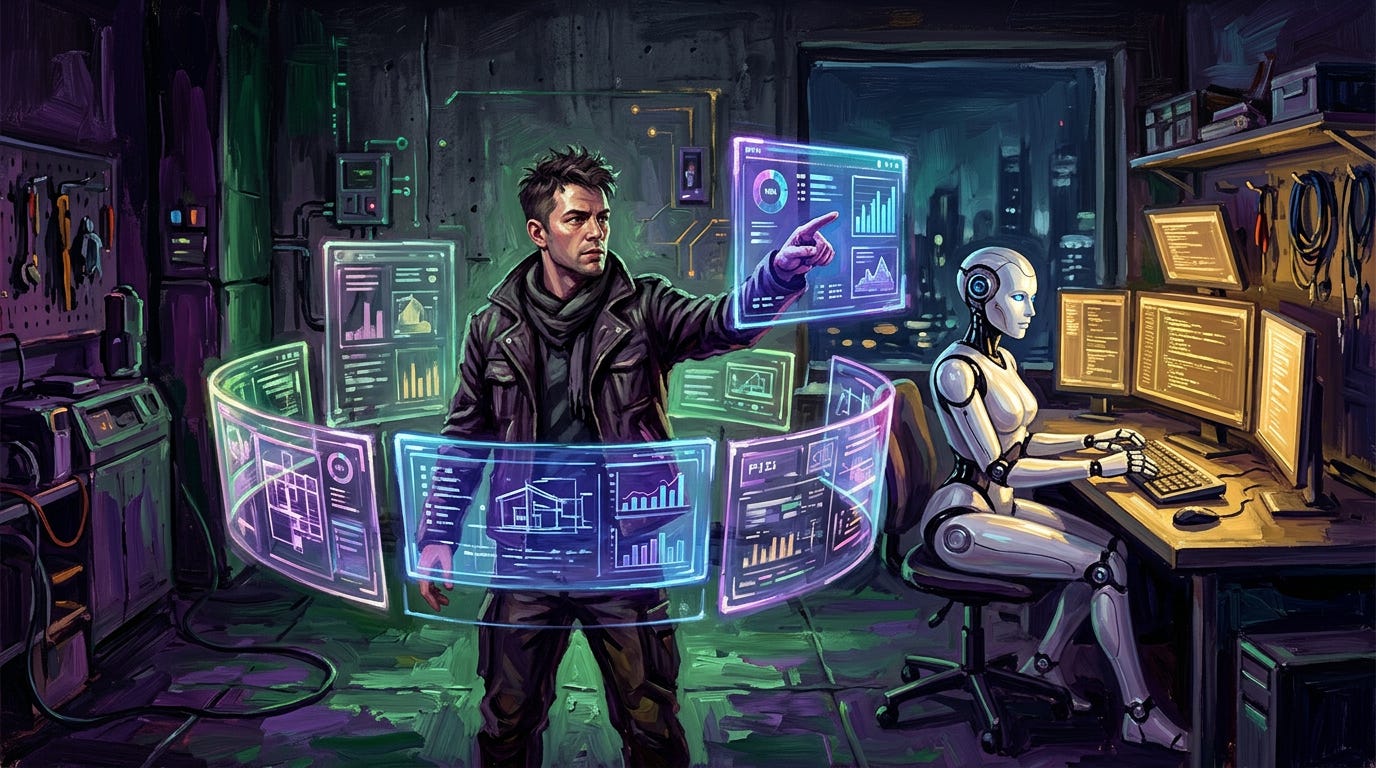
These integrations changed the job description. Leo spent his fifteen days brainstorming, playtesting, and placing cameras while Claude Code wrote 27,000 lines beneath him. TwelveTake’s pitch to REAPER users follows the same model, inviting producers to describe the job in plain English and supervise the result. The creative decisions remain human, and the mechanical path from decision to execution has a new handler.