

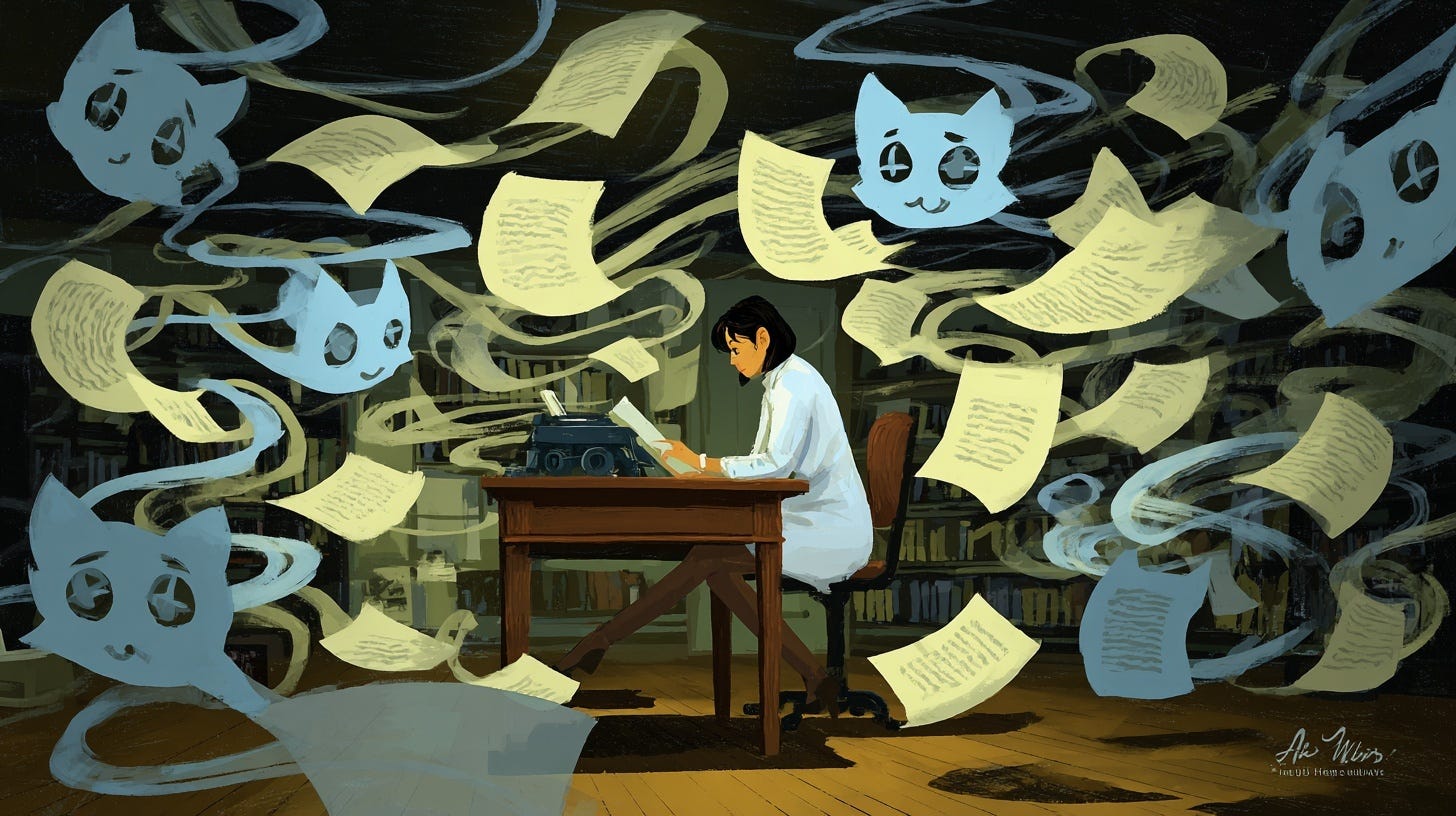
AI writing tools have revolutionized content creation, but they come with a unique challenge: the tendency to produce formulaic phrases and patterns that experienced users can spot immediately. Understanding and addressing these "AI-isms" can transform your AI-assisted writing from generic to genuinely engaging.
Writers who work extensively with AI become hypersensitive to these patterns because we encounter them constantly across different platforms and models. Interestingly, this sensitivity can sometimes lead to false positives. I recently had a human editor flag one of my manually written lines as "obviously AI-generated," highlighting how these patterns exist in human writing, too. The reason AI gravitates toward certain phrases is that they appear frequently in human-written training data.
However, recognizing and editing these patterns remains best practice for creating fresh, original prose. The goal isn't to eliminate every potentially AI-generated phrase, but to ensure your writing doesn't feel mechanical or predictable.
Common AI Word Patterns
AI models consistently favor certain vocabulary choices that create a distinctive "voice." Here are the most frequently overused words and phrases:
Commonly Used Words: absolutely, abyssal, affection, aftermath, algorithmic, aligned, almost alive, amidst, amiss, analyzed, ancient, anticipating, anticipation, apprehension, bashfully, beacon, beacon of hope, blown wide, cacophony, calculate, calculated, calculating, calibrated, calloused fingers, can't help but feel, carried the weight, cascading, cast a warm glow, casual indifference, cataloged, ceaseless, chaotic, charged, charm, chill, chilled, chilling, chromatic, churl, churn, churned, churning, clandestine, clenching, clenching her jaw, clenching his jaw, coded, comfortable, comforting, complex, computed, constructed, could feel, crystal, crystalline, crystallized, dance, dances, dancing, dart, database, delve, delved, delving, depths, desire, determined, determining, disrupt, disrupted, disrupting, down her spine, down his spine, down my spine, dust mote, echo, echoed, echoes, echoing, efficient, effortless, electric, encounter, enigma, enigmatic, ensure, ensuring, ephemeral, etch, etched, etching, ethereal, eyebrow, facade, familiar, fascinating, firmly, flawless, fleeting, flicked, flicker, flickered, flowing, fluttered, footfall, footsteps, foreboding, fractured, fragmented, framework, furrowed, furrowing, galaxies, galaxy, gleaming, glean, gleaning, glided, glint, glinting, glistening, gloom, glooming, grapple, grappling, grave, heart, high-stake, hulking, implicating, implication, impose, imposing, indexed, input, intensity, intricate, intrigue, intriguing, jaw clenched, kaleidoscope, layers of complexity, learned, leveraging, lilt, long shadow, loomed, looming, looms, luminous, lurch, lurched, lurching, macabre, magnetic, marble, marveled, mask of indifference, maw, measured, mechanical, methodical, mosaic, moth to a flame, moths to flame, navigate, navigated, navigating, newfound, normalcy, oppression, oppressive, optimized, otherworldly, output, palpable, pang, parameters, pattern, patterned, pawn, perfect, peril, playfully, political landscape, pomposity, pools, porcelain, potential, pounding, practiced ease, predator, predictable, preposterous, pristine, processed, profound, programmatic, pull, pulse, pulsed, pumping, quickened, quivered, race, raced, racing, racing heart, radiant, remarkable, reminder, repository, resolve, resolved, resolving, resonance, resonated, restrained, reverberated, rhythmic, roaring, same, sanctuary, satin, scanned, scanning, scratched her head, scratched his head, scripted, searing, sense of, sent shivers down, sentinel, sentinels, sequenced, shared breath, shattered, shimmered, silence, silk, simmering, sinewy, single tear, sinister, skipped a beat, soft ache, solace, solitary, spectral, standard, standardized, stark, steeled, stomach, streaming, streamlined, structure, sturdy, surreal, swept away, symphony, synchronized, synthetic, systematic, tangible, tantalizing, tapestry, templated, tenderness, tension, testament, the last thing, throbbed, thundered, tight, tinge, tinged, to the core, together, traced, tracing, transfixed, treacherous, trembled, trepidation, Tuesday, uncanny, unexpected challenge, unravel, unraveling, unreadable, unsettled, unspoken, unwavering, variable, variables, velvet, vibrated, vise-like grip, voice hitched, warmth, wavered, wavering, weight, whimsical, whisper, yearning
Overused Adverbs: angrily, anxiously, barely above a whisper, carefully, cautiously, coldly, completely, coolly, coyly, deliberately, dreamily, eagerly, ever so slightly, fervently, gently, happily, helplessly, hesitantly, hungrily, inexorably, intensely, knowingly, languidly, lazily, lightly, longingly, loosely, needily, nervously, passionately, perfectly, precisely, purposely, quickly, really, reluctantly, sadly, seductively, sharply, shyly, slightly, slowly, slyly, smugly, softly, suddenly, suggestively, sweetly, teasingly, tenderly, tightly, truly, utterly, very, warily, warmly, wickedly, wistfully
Scene-Setting and Emotional Clichés
AI writing often relies on predictable atmospheric shortcuts. Weather becomes mood shorthand ("rain pattered against the window, mirroring her melancholy"), while physical reactions to emotions follow rigid patterns. Instead of "his jaw clenched" for anger or "her heart raced" for nervousness, consider how your specific character would actually respond to stress.
Dialogue tags present another common pitfall. AI tends toward overly dramatic alternatives to "said" or redundant emotion tags that repeat what the dialogue already conveys. The strongest dialogue usually relies on simple tags or none at all when the speaker is clear.
Genre-Specific Patterns
Science fiction writing shows predictable AI patterns. Instead of "lights flickered ominously" or "with machine precision," develop specific details that serve your unique story. Generic phrases like "the hum of machinery" or "sterile white corridors" create atmosphere but don't advance plot or character development.
Improving Your AI-Assisted Writing
The key to better AI writing lies in recognizing these patterns during editing. Create a personal list of words and phrases you notice appearing frequently in your work. Use find-and-replace functions to locate potential AI-isms, then evaluate whether each instance serves your specific narrative goals.
Remember that variation in sentence structure, natural transitions, and confident prose typically reads better than overly cautious or formulaic AI-speak. Trust that good ideas don't need constant qualification or artificial enthusiasm.
AI writing tools remain powerful allies for content creation, but conscious editing for these patterns will elevate your work from functional to memorable.
What AI-isms do you notice most frequently in your own writing?
For a great twist on science fiction and fantasy, back the Jake Rendon Kickstarter: Elven Destiny today!

I’ve noticed that AI when creating dialogue between two characters is often very abrupt, like it’s running down its checklist of bullet points that you provided in an outline. This makes it feel very unnatural as people tend to ease into uncomfortable topics.
Also, most surprising to me is how AI gets things wrong like a real person does. Sometimes events happen out of sequence even though I provide a timeline/outline of the sequence. And sometimes it “forgets” basic facts about the character/events.
I've been trying my hand at this using ChatGPT, because you can use the latest model for free, and can keep the session open, even as you run into usage limits. It's been fun and interesting, for a story in my mind for decades. I need to prompt a lot, and sometimes direct it to specific parts of the source material I uploaded, but I find it satisfying so far. Grok 3 is free but left me unsatisfied. You've written very positively on Claude Opus, but it costs, and I'm on a budget.
So far, I don't think my story has fallen into this uncanny valley, perhaps because of its unusual subject. It even suggested some unexpected phrases I found apt.
What other models do you recommend that might be good for creative writing?