

Anthropic retired Claude Opus 4.1 on August 5, one entry in a deprecation queue that also includes OpenAI’s GPT-4 legacy snapshots in October and the Sora API in September. None of these retirements made headlines, yet collectively they affect the roughly two-thirds of organizations that already run generative AI models in production. The release cadence across major providers has compressed to the point where deprecation tracking has become a standing operational discipline, and the models themselves now deprecate faster than the protocols connecting them.
Shrinking windows
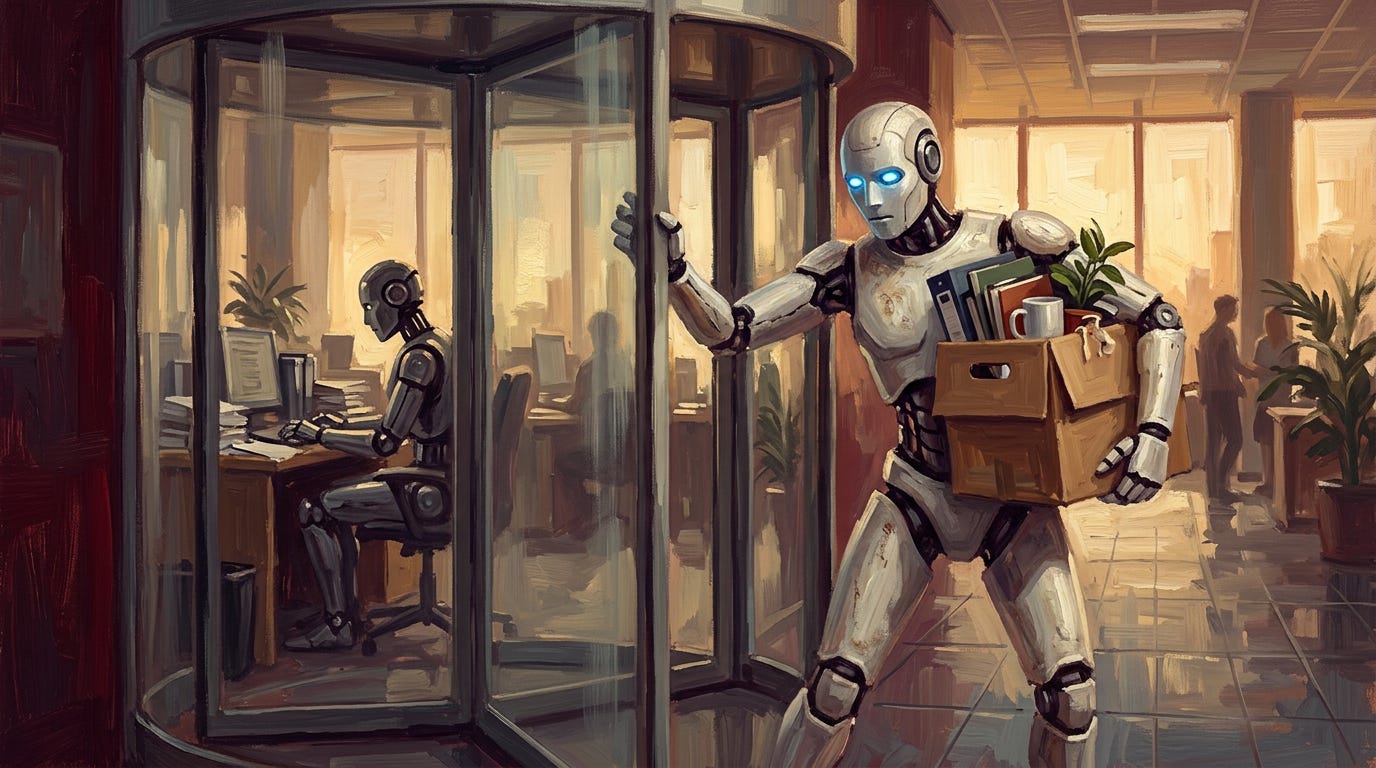
Anthropic has shipped seven Opus-tier models in roughly fifteen months, from Opus 4 in May 2025 through Opus 5 in July 2026. Opus 4.1 retired less than a year after its release, following a four-stage lifecycle that guarantees sixty days’ notice before a model stops accepting requests. That sixty-day window approximates the interval between Opus releases themselves.
OpenAI’s deprecation schedule runs on a similar cadence. The company retired GPT-4o from ChatGPT on February 13, six months after reversing an earlier retirement attempt that had provoked user backlash. GPT-4 legacy snapshots are scheduled to shut down on October 23, and the Sora API will follow on September 24. The Codex CLI alone cycled through five optimized model generations and three deprecation waves in eight months.
Research published in May estimated that model lifecycles have compressed from 18–24 months to 6–12. That compression ripples through dependent systems. When Snowflake’s Cortex AI platform ran its own deprecation wave in April, the trigger was upstream model retirements over which the platform had no control. Platform teams now track multiple vendors’ deprecation calendars simultaneously, each running on independent clocks with no coordination between them.
Contracts and tradeoffs
The MCP 2026-07-28 specification, published on July 28, introduced a formal deprecation policy requiring at least twelve months between a feature’s deprecation and its earliest possible removal. MCP’s Tier 1 SDKs crossed four hundred million monthly downloads before the spec shipped. A protocol feature serving that user base will outlast most of the models that call it.
Anthropic documents its pinned identifiers as frozen snapshots. A call to claude-opus-4-8 will never silently resolve to a successor. OpenAI’s Sol/Terra/Luna tiering works differently, treating model identity as a capability band in which the underlying checkpoint can change. A pinned identifier trades stability for forced migration at retirement. A tiered alias trades continuity for behavioral drift that no single migration event surfaces.
Software versioning works because the contract between caller and callee can be fully specified. A function that accepted certain arguments in version 2.0 will still accept them in version 5.0. Model output shifts with every new checkpoint in ways that resist specification, because the contract governs probabilistic generation. Two models with identical benchmarks can produce different enough output to break a downstream parser or alter the tone of a customer-facing product.
Building for impermanence
Gartner projects that by 2028, sixty percent of software engineering teams will adopt AI evaluation and observability platforms, up from eighteen percent in 2025. The growth tracks a practical need: when the model underneath a production system changes every few months, an automated evaluation suite that validates the replacement against real workloads before cutover becomes the only mechanism for continuity. The eval pipeline has become the persistent layer in a stack where everything beneath it turns over on a quarterly cadence.
The choice between pinned identifiers and tiered aliases carries architectural consequences. A team pinned to claude-opus-4-8 knows exactly which model runs on every request, and can regression-test a successor at its own pace before switching. A team routing requests to a capability tier gains uninterrupted service when a checkpoint changes underneath, and accepts that behavioral shifts may arrive without a migration event to trigger review.
Migration involves more than swapping a model identifier. Starting with Opus 4.7, Anthropic returns HTTP 400 when temperature, top_p, or top_k receive non-default values, requiring teams to drop those parameters and steer output through prompting alone. Successor models in both lineups tend toward greater verbosity, shifting token-usage patterns and cost projections that downstream budgets depend on. A model that scores identically on public benchmarks may behave differently on the specific distribution that a production system serves.
Still figuring it out
Package managers, semantic versioning, and long-term support releases took software decades to develop. The AI model lifecycle has existed for roughly two years, and the tooling surrounding it reflects that youth. Providers are building governance structures at the same time that they ship the models those structures are meant to govern. The production teams that have adapted treat the model as the replaceable component and the evaluation pipeline as the permanent one.
Do Chinese models have the same issue?
The essay shows why Byron AI is so important.
https://indiecrowdfund.com/projects/infogalactic/byron-ai
And if Byron is so cheap, this indicates other products will develop their own ai to control the back end variable. Or is the focus of the Byron AI and training required so focused this is not applicable?
For industry this foundation of sand is going to be a problem.