

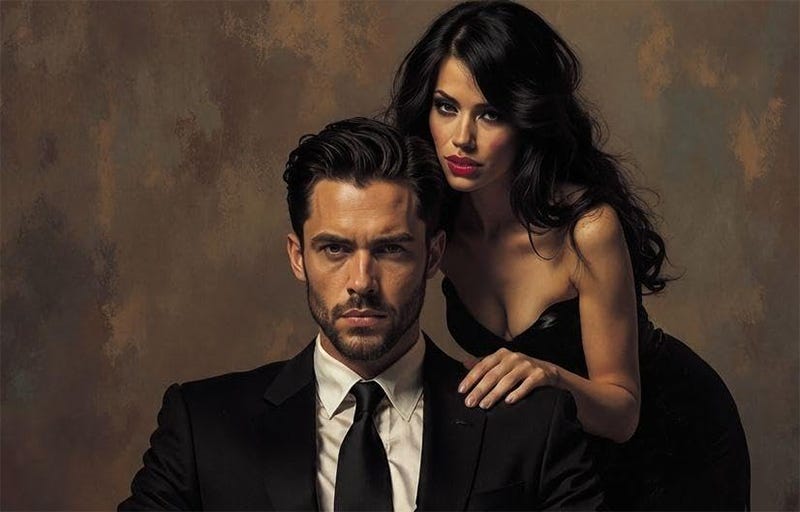
“SILENCE.” Viktor’s voice cut through the chaos like a blade. The room instantly stilled. “Please continue, Mr. Grahame.”
“The revelation must be carefully staged,” Elliott explained. “The basic concept has already been established through fiction, through books, films, and television series that portray vampires sympathetically. We’re already halfway there as far as existing popular culture goes.”
“Romantic nonsense,” someone muttered.
Elliott ignored it and pressed on. “Now we can begin releasing scientific papers about genetic anomalies that extend life, enhance healing, and require specialized nutrition. We frame these anomalies as simple medical conditions, not a separate species or form of life. We permit researchers to gradually discover us rather than revealing ourselves directly. My own company, HemaTech, will provide us with an effective vehicle that can be utilized in this manner, and serve as a foundation to propagate narrative-supporting information throughout the biotech industry and the public.”
“And when the humans realize we feed on them?” ibn Marwan asked pointedly.
“We emphasize that modern vampires use blood banks, willing donors, synthetic alternatives. We position ourselves as having evolved beyond predation, just as humans evolved beyond cannibalism.”
“Ingenious,” Andrei Romanov said, stepping forward. “And well-considered. But it neglects the psychological side, to say nothing of the religious aspects of the situation. Humans fear what they don’t understand! And history is littered with genocides committed for far less cause than the discovery of genuine predators living among them.”
“Which is why we must reveal ourselves carefully and from a position of strength,” Elliott argued. “We demonstrate our integration into human society—the artists, scientists, leaders, innovators who’ve been vampires all along. We show ourselves to be indispensable even as we make ourselves known.”
Eleanor Beaufort leaned forward. “You’re asking us to gamble our entire existence on human rationality? That’s not optimistic, that’s insane!”
“No, I’m asking you to recognize that the gamble is already in play,” Elliott countered. “The only choice we have is whether we load the dice or find ourselves going bankrupt at the table without a way to extricate ourselves from it.”
“There is another option,” Klaus Richter said from beside Medici. His German accent made the words sound even more ominous. “We could prevent the discovery.”
Viktor Romanov frowned at him. “He’s already explained why killing individual journalists and scientists won’t work—”
“Not killing individuals,” Richter interrupted. “We can kill the science itself.”
A murmur ran through the room. Elliott felt a chill that had nothing to do with temperature.
“Elaborate, Herr Richter,” Viktor commanded.
Richter bowed with rigid formality. “The genetic sciences that threaten us depend upon a constant flow of technology, funding, and public support. Their infrastructure is fragile. We have the resources to disrupt it, if not shatter it entirely, and starve it financially. We also have enough political influence to regulate the science into irrelevance where we can’t ban it entirely. We sabotage the AI data centers and get them outlawed on the basis of excess energy consumption and the environment. We could also orchestrate a global campaign against genetic manipulation—frame it as dangerous, unethical, and the intellectual descendant of the Nazi eugenics program.”
He smiled coldly. “And, of course, we kill every scientist working in any field we deem problematic.”
“You’re talking about destroying at least two of the most promising fields of human advancement,” Bathory said, horrified.
“To preserve our kind? Yes.” Richter’s pale eyes were utterly cold. “We’ve done it before. In China, after the inventions of gunpowder and paper. Nuclear fusion in the 1950s. Aerospace technologies in the 1970s. There is ample precedent. For centuries, any scientific progress that threatened our interests in any way was redirected toward harmless channels when it was not entirely eliminated.”
Elliott looked around the room, seeing approval on too many faces. “You can’t be serious.”
“If science is a threat, then it must be considered an enemy,” ibn Marwan interjected smoothly. “I think Herr Richter’s approach has merit. A targeted campaign to discredit genetic research, some high-profile failures, popular riots against the rising unemployment caused by AI, a few carefully orchestrated disasters blamed on genetic treatments…”
“The anti-GMO movement already provides a framework,” someone added from the crowd. “We could expand it and radicalize it.”
“We would risk creating a new Dark Age,” Elliott said, his voice rising. “And condemn millions to die!”
He felt an icy hand clamp down upon his wrist.

Out of the Shadows is available in Kindle, KU, audibook, and hardcover editions.
Interesting choice of font. I didn't mind it. Absolutely love lingering over this novel yet one more time. This is a story that will come along ever so often as a fun read for an airplane ride or a boat cruise out to an island vacation for many years to come. Looking forward to future such novels in the world of Midnight's War.
They're making it harder than it needs to be. Some glitter, some One Direction haircuts, and an #IStandWithOtherkind hashtag and people will be lining up to donate blood in exchange for social media status points.
Seriously, it's refreshing to read something where the characters think and act on more than one superficial level. And a guy named "Klaus" promoting fake science, heh.
The typeface and stylized beginning of the opening paragraph are cool. It evokes the feeling of reading an old novel.