

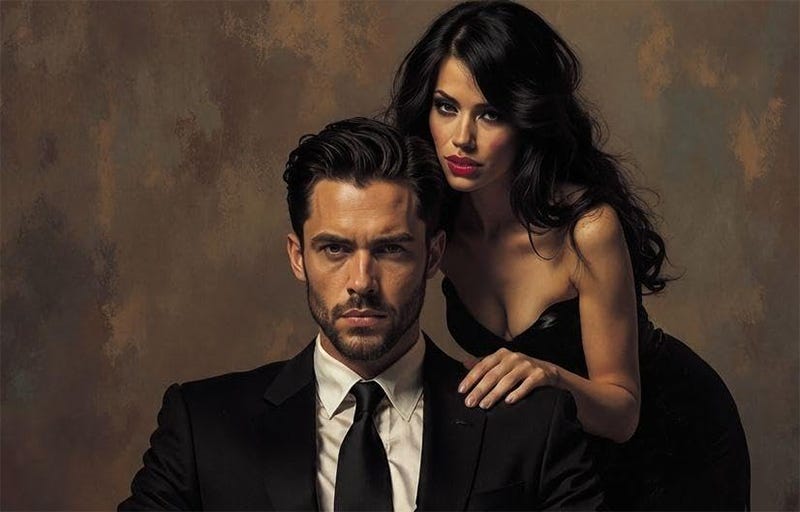
“Enough!” Medici whispered harshly in his ear. “Do not speak again until you are spoken to!”
“They will all die in their various billions soon anyhow,” ibn Marwan observed with the detachment of true antiquity. “What does it matter to us if they die from cancer or car accidents or old age?”
“Thank you, everyone,” Viktor broke in, his voice ringing with absolute authority. “The Council has heard your suggestions. Lord Medici advocates controlled revelation. Herr Richter proposes scientific suppression. Prince Romanov favors the traditional approach of targeted eliminations. Are there any other proposals?”
Chang Wei stirred in his chair. “There is one possibility not yet discussed. Withdrawal.”
The room turned to him with interest.
“We could abandon human society entirely,” the ancient Chinese vampire continued. “Retreat to prepared locations that can be defended—islands, underground cities, remote territories. We can render them off-limits and permit humanity to proceed unhindered while we wait in seclusion.”
“For how long?” Eleanor Beaufort asked.
“Centuries, one would assume. Until humanity either destroys itself or evolves to a point where it can be collectively reasoned with.”
“You’re talking about voluntary stagnation,” Medici said quietly. “Without new blood, without new turnings, we would ossify.”
“Perhaps that is our fate regardless,” Chang Wei said philosophically. “We are not a species that propagates naturally, after all.”
“Defeatist nonsense,” Andrei snarled. “We are apex predators, not hermetics waiting for the sweet release of death!”
“We are anachronisms,” Chang Wei corrected. “Remnants of an age when giants and demons walked the Earth. Of a world that no longer exists.”
Amara Keita spoke again. “Each proposal has various merits and flaws. Revelation risks war in the short-term but offers the potential for integration over time. Suppression preserves the status quo, but cripples human progress and may only serve to delay the inevitable. Withdrawal prioritizes our survival, but at the cost of relevance. And the traditional solution appears to be insufficient, as the very fact that we are having this discussion indicates.”
“Then what do you propose?” Viktor asked her.
Amara was quiet for a long moment. “I propose that the Council examine the four options and consider which of them we deem to be potentially viable. This is a decision that will resonate through the centuries. It requires more than a single evening’s deliberation.”
“I would remind the Council that we are expected to respond to Porter within six days.”
“You can manage the immediate threat regardless of the direction of our longer-term strategy, Lorenzo,” Viktor said. “The question of which path we choose for the next millennium is much more important.”
“May I suggest one more thing for the Council to take into account?” Medici asked.
Viktor nodded.
“Whatever the Council decides, it should remember that humanity is no longer the humble, helpless race it was when many of us ascended. They’ve multiplied, split the atom, decoded the genome. In some ways, they are more capable of accepting the truth than ever before. However, they’re also capable of destroying us if that truth is revealed in a manner that they find excessively threatening.”
Viktor rose, as did his four peers, and Elliott felt as if the entire chamber seemed to shrink in awareness of their power. “The Council will deliberate the matter. You are all dismissed. Lord Medici, please keep Mr. Grahame available to us here in Geneva for the next two days. We may have further questions for him.”
Medici bowed in assent. The dismissal was absolute. Vampires began filing out, their conversations an impossible mixture of languages and accents separated by centuries. Elliott caught fragments of debate and argument, and although he didn’t understand much of what was being said, he could hear the fear and anger.
As they left the chamber, Medici took his arm. “That was well-done, Elliott. Borderline suicidal, but brave and well-spoken.”
“They’re going to choose suppression,” Elliott said quietly. “I could see it in their faces. They’re ancient and understandably set in their ways. They’d rather destroy science and human progress than accept even a small risk of exposure.”
“Perhaps,” Medici said, though his expression was troubled. “But you should know that the Council rarely acts hastily. They may surprise us.”
“Or they may just decide to eliminate everyone who has anything to do with the crisis,” Torretti added helpfully. “Including you and everyone associated with you.”
“They wouldn’t,” Elliott said, though he wasn’t sure.
“They’ve done worse,” Richter said bluntly. “In 1347, they triggered the Black Death to cover a vampire war that had gotten out of hand and come to the attention of the authorities. A third of Europe died to preserve the Masquerade.”
Elliott stopped walking. “That’s not possible.”
“Isn’t it?” Richter’s smile was humorless. “How many plagues throughout history served our purposes? How many wars? How many disasters, whether historians describe them as being natural or accidental?”
“So they’ve been manipulating human history all along?”
“Not manipulating,” Medici corrected. “That implies a level of control, as well as a sense of purpose. No, we’ve simply been surviving. And sometimes survival requires terrible choices.”
They reached a suite that had been prepared for them. Through the windows, Lake Léman stretched out like black glass under the winter moon.
“What happens now?” Chiara asked.
“Now we wait,” Medici said. “The Council will debate through the night. I’d expect that by dawn, they’ll have reached their decision. They’ll let us know whenever it suits them. The five of them may disagree from time to time, but if there’s one thing they do well, it’s keeping their intentions to themselves.”
“And Porter’s deadline?”
“Will be addressed one way or another. It’s out of our hands regardless.”
Elliott stared out at the lake, his enhanced vision picking out details no human could see—a boat far offshore, a couple walking the distant shore, the normal life of humanity proceeding without knowledge of the monsters debating their fate in a luxury hotel.
“I’ve made things worse, haven’t I?” he said quietly.
“I don’t think so. Truly. You’ve merely forced a choice upon them, one that’s been arguably coming for a long, long time,” Medici replied. “Whether that’s for the better or for the worse remains to be seen.”
Somewhere in the hotel, five ancient vampires were deciding the fate and future of two species. Elliott wondered if humanity would ever know how close it had come to having its scientific progress stopped in its tracks, all to preserve a secret that was already unraveling.
The hours until dawn stretched ahead of him like an eternity. For perhaps the first time since his transformation, Elliott truly understood what immortality meant—not just endless time, but the weight of choices that would echo through centuries.
Outside, Geneva slept peacefully, like the rest of the world unaware that the dawn might bring either revelation or catastrophe. One way or another, the Masquerade was ending.
The only question now was what would replace it.

Out of the Shadows is available in Kindle, KU, audibook, and hardcover editions.