

AI video generation spent most of its first two years pursuing realistic output. The major tools competed on visual fidelity and motion coherence, benchmarked against how closely their footage resembled live action. Over the past five weeks, three new models have arrived, and each starts from a different theory of what the discipline still requires.
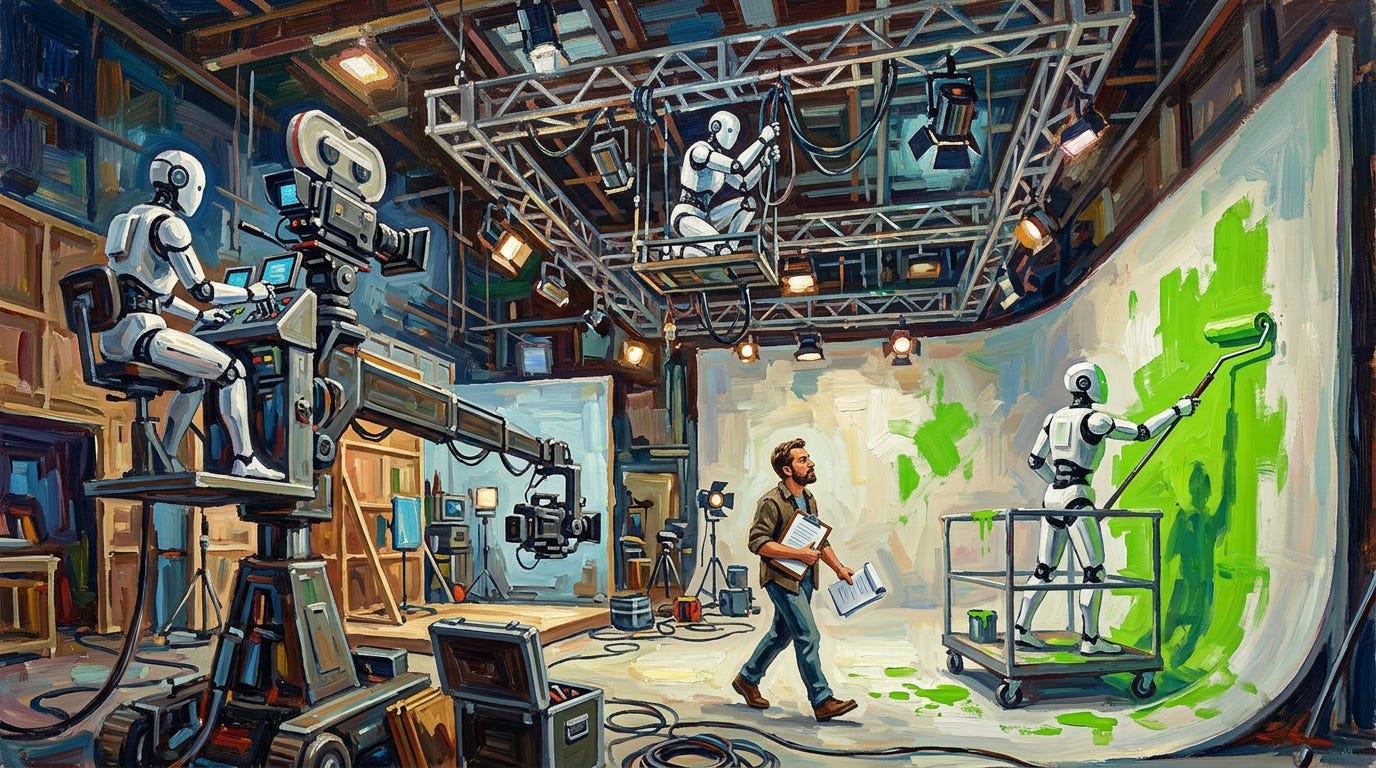
Spoiled for choice
The field entered August with more credible engines than any single production is likely to need. Runway Gen-4.5 leads on camera control and shot direction, Kling 3.0 excels at complex human motion, and Google’s Veo 3.1 generates native synchronized audio alongside its footage. OpenAI retired Sora in March after the tool reportedly cost a million dollars a day to operate while generating just over two million in total revenue. Three more models have since arrived: FLUX 3 from Black Forest Labs, Gemini Omni Flash from Google, and Seedance 2.5 from ByteDance.
Professional video creators have responded to this abundance by treating individual models as specialized components. A single project might generate its establishing shots in Runway for camera direction, move to Seedance for dialogue scenes where character and product-detail preservation across cuts matters most, and finish in Veo for segments that need synchronized sound. The three new models each start from a different assumption about what limits the medium.
Real-world alignment
Black Forest Labs launched FLUX 3 on July 23, billing it as a multimodal foundation model trained jointly across images, video, audio, and robotic action prediction within a single architecture. The Freiburg-based lab, whose founding team built the latent diffusion framework behind Stable Diffusion, developed the model using its Self-Flow research. BFL argues that training across modalities forces the network to develop an internal model of physical dynamics, because generated sound must correspond to visual events and motion must respect physical constraints. FLUX 3 Video generates clips up to twenty seconds with native synchronized audio from text, image, video, or keyframe inputs, and can chain individual clips into longer sequences with consistent visual references across shots.
BFL has already extended the architecture into robotics. FLUX-mimic, built on the FLUX 3 backbone in collaboration with mimic robotics, handles factory tasks at Audi, including kitting parts into structured trays, inserting electronic control units, and manipulating soft flexible materials like seals and cables that conventional automation cannot manage. BFL reports that adding action prediction to the training initially degraded video quality by up to ten percent, but that performance recovered fully after approximately 3,500 training steps, suggesting that the action modality does not permanently cost the model its video capacity. The full robot system achieves 101-millisecond reaction times on a single Nvidia RTX 5090, roughly matching human visual response speed.
FLUX 3 remains in gated early access with no published pricing. BFL’s own preference evaluations, conducted on ten-second 720p clips, placed FLUX 3 Video ahead of Runway Gen-4.5 in 77 percent of comparisons, but against Gemini Omni Flash the margin was 52 percent, essentially indistinguishable from chance. BFL has announced an open-weight FLUX 3 Dev backbone but has not released it.
Elaborate controls
ByteDance launched Seedance 2.5 publicly on July 31, betting that the primary constraint on AI video remains duration and reference fidelity. The model generates thirty-second single-shot clips at native 4K resolution from up to fifty multimodal reference inputs, including images, audio, 3D models, and style references, and an ultra-long beta mode extends single generations to 180 seconds. Region-level editing allows changes to a specific part of a frame without regenerating the entire clip. ByteDance skipped four version numbers to signal a generational leap, and the launch comes five months after cease-and-desist letters from Disney, Warner Bros, and Paramount forced Seedance 2.0 temporarily offline over IP concerns.
Gemini Omni Flash, which Google released in public preview on June 30 and integrated into Google Vids on July 17, treats video generation as a conversation. The model retains a stateful memory of each scene it produces, allowing creators to adjust lighting, swap characters, perform style transfers, or relight scenes across consecutive turns without regenerating the clip. Google embedded the model into its existing product surfaces, including YouTube Shorts Remix and YouTube Create, letting creators edit footage with text prompts inside tools that they already use. ByteDance built Seedance 2.5 to produce the best possible first pass, while Google designed Omni Flash to make any first pass improvable.
Taking the reins
The AI video market has split along architectural lines. Benchmark comparisons between top-tier engines increasingly produce coin-flip margins, and competition has migrated from output quality to the layers surrounding the model. Several engines can now produce comparable footage, and the workflow built around each one, from reference management through iterative editing to deployment surface, separates them more decisively than raw quality does.
The open weights H3 I suspect will become the main model since it can be run on relatively humble hardware and the audio reference lip sync capabilities as demonstrated in this AI music video. It's also much cheaper than seedance 2.5.
We know animations are commercially successful but it requires human voices. This means that a audio first approach using AI generated visuals to support would be able to continue this.
Story matters most, followed by audio, and in the end visual.
Likely we'll see an avalanche of AI music videos created using H3.
https://x.com/i/status/2084656611985907724