

Anthropic launched Claude Managed Agents on April 8, a developer API for running long-horizon agents in the cloud with sandboxing, state management, and credential isolation handled by Anthropic’s infrastructure. Within a week, Claude Code shipped routines and /ultrareview, product features that run the coding agent on schedules, webhooks, and parallel review fleets without requiring a local machine. The two launches share a common execution layer.
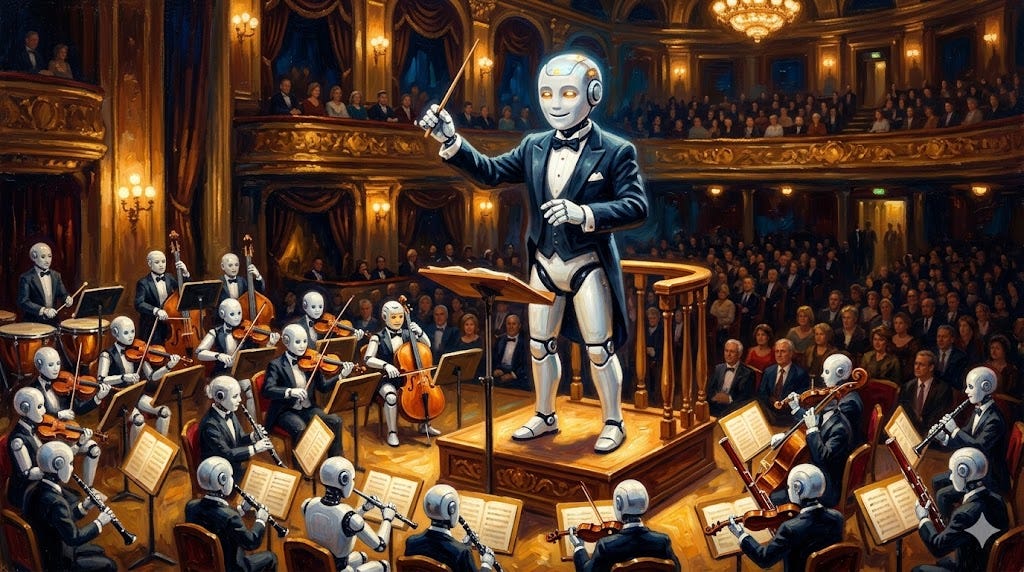
Interchangeable agentic components
An engineering blog post published alongside the Managed Agents launch framed the design problem as harness assumptions going stale. The scaffolding that wraps around a model encodes what that model cannot do on its own, and those assumptions expire as the model improves. In one example from the post, Claude Sonnet 4.5 would wrap up tasks prematurely as it sensed its context limit approaching, so the harness added context resets. Claude Opus 4.5 no longer exhibited the behavior, and the resets became dead weight. Managed Agents, priced at standard Claude token rates plus eight cents per session-hour, provides the sandboxing, state management, credential isolation, and tracing that developers otherwise spend months building.
The architecture splits the agent into three independent interfaces. The session stores every event in an append-only log, the harness runs the loop that calls Claude and routes tool calls, and the sandbox provides an isolated execution environment for generated code. The session log also serves as recoverable context that lives outside Claude’s context window, so context management operations like compaction and trimming can draw on the full event history through a getEvents() interface rather than discarding tokens irreversibly. Anthropic’s engineering team drew the analogy explicitly to operating-system design, where abstractions like read() outlasted the hardware beneath them because they made few assumptions about the implementation behind the interface.
In the initial design, all three components shared a single container. A container failure destroyed the session, and a harness bug looked identical to a network drop. Decoupling made individual containers disposable. If one died, the harness caught the failure as a tool-call error, and the system could provision a new container from a standard recipe. The separation also moved credentials out of the sandbox. The system wires Git tokens into the local remote during container initialization, and OAuth tokens for MCP tools live in a vault that the harness accesses through a dedicated proxy. Generated code never touches authentication material. Notion, Asana, and Sentry are among the early adopters that have integrated agents built on the service into production workflows.
A fleet of agents on the clock
Claude Code shipped routines and /ultrareview on April 14 and April 16 respectively, within a week of the Managed Agents launch. Both run on Anthropic’s cloud infrastructure. Earlier Claude Code features had progressively stripped dependencies from the developer’s workflow, from retyping prompts to remembering timing to sitting at the desk. Routines completed that progression by removing the machine itself.
A routine bundles a prompt, a repository, and a trigger, which can be a cron schedule, a GitHub webhook, or an API endpoint with a dedicated bearer token. When the trigger fires, Anthropic provisions a Claude Code container, loads the routine, and runs the prompt to completion whether or not the developer’s laptop is open. The difference from a traditional cron job is that each trigger starts a full Claude Code session with reasoning capabilities, so a routine that encounters an unexpected error attempts alternative approaches rather than halting. The use cases that emerged in the first two weeks include nightly dependency-upgrade PRs, post-deploy smoke checks that scan error logs and post results to Slack, and weekly documentation audits.
/ultrareview applies the same cloud execution model to parallel multi-agent code review. The command uploads a branch state or clones a GitHub PR into a remote sandbox, then orchestrates multiple reviewer agents that examine the change from different angles, including logic, edge cases, security, and performance. Each finding passes through an independent reproduction step before reaching the developer, a verification layer that Anthropic’s internal measurements put at a one-percent incorrect-finding rate. A default review deploys five agents per PR, with the fleet scaling to twenty on larger changes, at a cost of five to twenty dollars per run billed as extra usage.
Full-stack agentic development
Managed Agents and Claude Code’s cloud features rest on the same architectural premise. Agents need a persistent runtime that operates independently of any single machine or session, with durable state, isolated execution, and infrastructure that the agent vendor controls. With both the API and the product features shipping in the same month, Anthropic now provides the model, the execution environment, and the orchestration layer as a single integrated stack.
Apologies in advance for a dumb question: when an update is “shipped” does that mean that Claude gets all of these updates and starts using them during work sessions?