

DeepSeek engaged CITIC Securities last week to prepare an initial public offering on Shanghai’s STAR Market, with a pre-IPO valuation targeting $75 billion. The Hangzhou lab, whose open-weight models repriced AI inference for the entire industry, would become the most valuable pure AI company to list outside the United States.
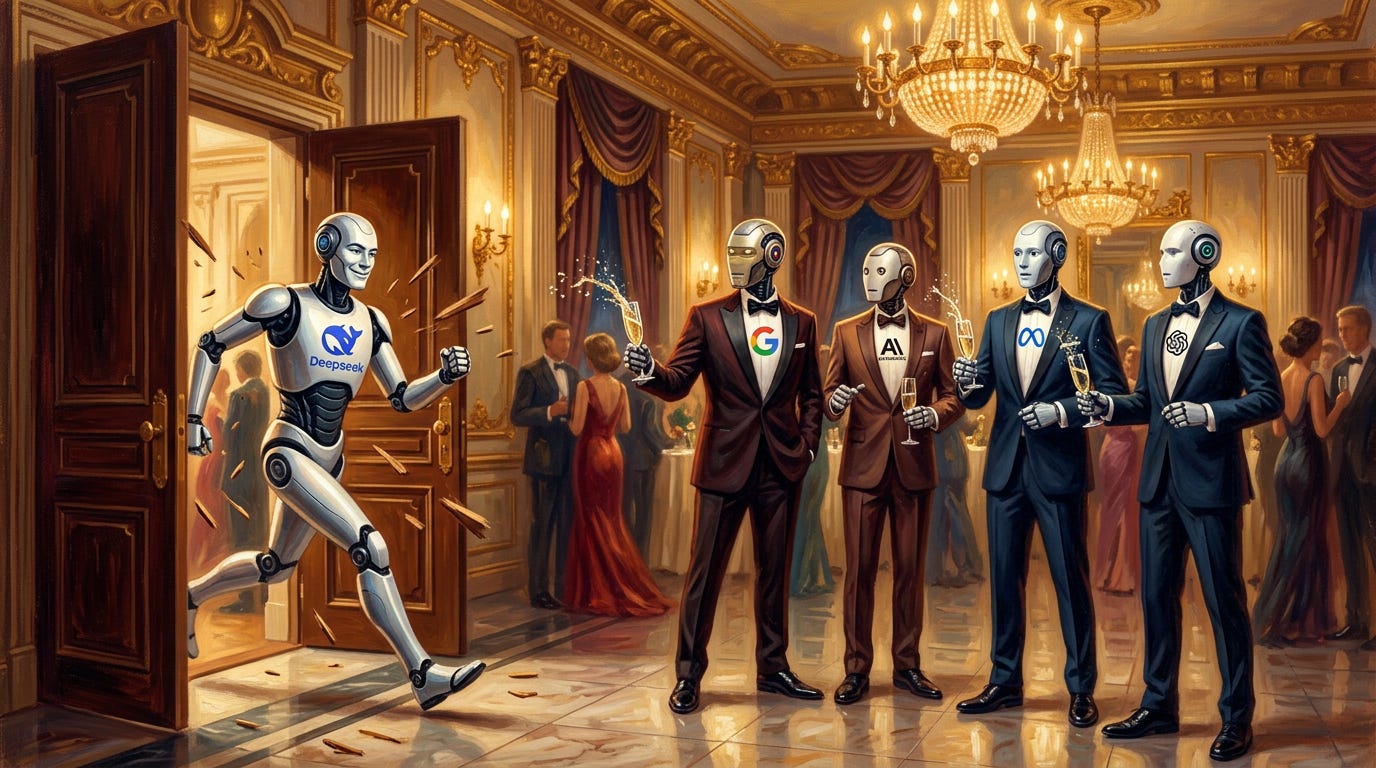
Time to get serious
The STAR Market, Shanghai’s technology-focused board launched in 2019, permits listings by unprofitable companies and allows weighted voting rights, a structure designed for frontier technology firms still scaling revenue. DeepSeek aims to begin the formal listing process before year-end, with a public debut targeted for 2027.
DeepSeek’s valuation has climbed from roughly $10 billion in April to $52 billion after its first external funding round in June, and a pre-IPO round now underway targets $75 billion. Zhipu and MiniMax, the first two Chinese AI companies to go public, listed in Hong Kong in January at combined valuations below $15 billion. DeepSeek would enter the STAR Market at five times that combined figure.
Liang Wenfeng founded DeepSeek in 2023 as a spinoff of High-Flyer, his quantitative hedge fund, which bankrolled the lab from its own profits for three years before accepting outside capital. In the June round, Liang contributed $3 billion personally and structured investor stakes as non-voting, retaining roughly 78% equity and operational control. The IPO also addresses a talent problem: DeepSeek has lost key contributors to ByteDance, Xiaomi, and Tencent in recent months, and Liang has told investors that public-market compensation structures are necessary to hold the team together.
The undercut of all undercuts
DeepSeek’s V4 Pro, released under an MIT license, prices input tokens at roughly one-tenth of GPT-5.5 while matching frontier models on coding, reasoning, and agentic benchmarks. The MIT license means that any enterprise can download the weights, run the model on its own infrastructure, and modify it without restriction or royalty.
Tuesday’s article traced the build-over-buy inversion now reshaping enterprise software procurement. As coding agents improve, organizations build functionality internally rather than purchasing packaged software. DeepSeek’s models sit at the foundation of that shift. An MIT-licensed frontier model at one-tenth the API cost eliminates the price advantage on which SaaS vendors relied for a decade.
DeepSeek reported revenue of ¥475 million ($70 million) in the first seven months of 2026, roughly ten times its full-year 2025 total. Losses narrowed from ¥935 million to ¥715 million over the same period, and V4 API gross margins exceed 50%. At $70 million in revenue against a $75 billion valuation, the gap between price and present output is roughly a thousand to one. The bet is on the trajectory and the ecosystem position, and that trajectory has accelerated every quarter.
A telling decision
DeepSeek’s choice of the STAR Market over Hong Kong signals a preference for mainland institutional capital. Most Chinese AI peers have opted for Hong Kong, which offers international investors and more flexible listing rules. The STAR Market’s weighted voting structure would let Liang retain operational control after the IPO, and a domestic listing positions DeepSeek for participation by state-backed funds and strategic investors with whom Beijing can coordinate.
Zhipu and MiniMax debuted in Hong Kong in January, and Moonshot filed for a dual Hong Kong-Shanghai listing this month. DeepSeek occupies a different position in this wave. Its open-weight models have global developer adoption, and Western enterprises run them in production. The other Chinese AI listings serve primarily domestic markets.