

For thirty years, using software has meant learning its interface. Every menu, form, and toolbar was designed around human attention and motor control. Three products that launched between Dreamforce and last week share a different assumption about who the interface is for, and each hands it to an AI agent.
Employees in the cloud
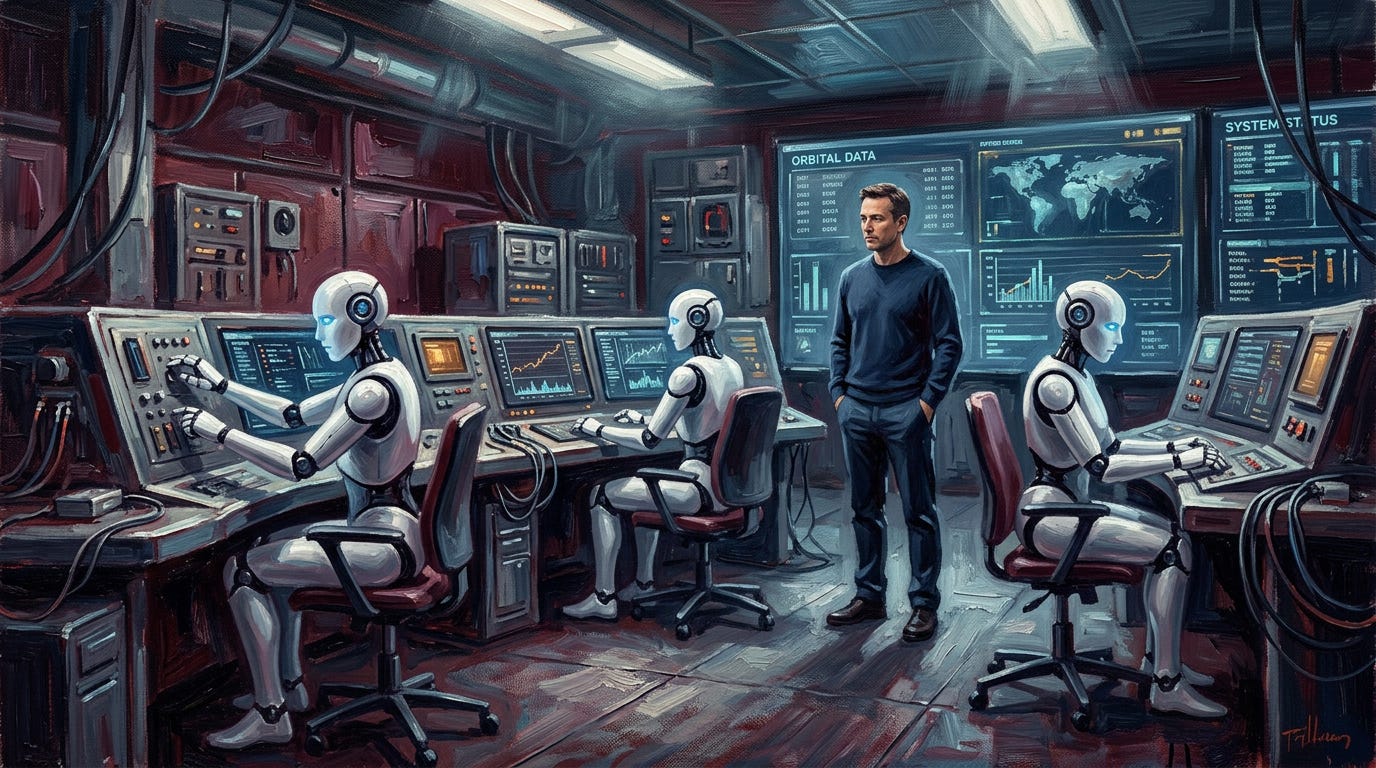
OpenAI unveiled Dots at its DevDay conference on September 29 as always-on agents, each one seated at its own cloud computer with its own browser. Powered by GPT-6 Astra, these agents reach more than four thousand applications through the plugin ecosystem and keep working after the user closes the laptop. OpenAI’s internal teams have put them to work investigating bugs that surface in Slack and assembling working prototypes from finished designs, and the agents can juggle several projects simultaneously.
A user can open a Dot’s cloud machine at any time to observe the agent mid-task, and can set rules governing which actions it may take independently. The user’s own computer stays separate unless explicitly connected, and updates arrive through ChatGPT, Slack, or Microsoft Teams. When no task is pending, a Dot engages in what OpenAI calls proactive research, scanning connected apps in read-only mode for work it might anticipate. Sensitive operations such as changing a password remain with the human. OpenAI cautioned that agents “can still make mistakes” and advised users to review consequential work. One Dot comes included with Pro and Business Premium plans, though subscribers in the European Economic Area, Switzerland, and the United Kingdom are excluded at launch.
Driving shotgun
Brett Adcock founded both Figure AI and Archer Aviation. His latest venture, Hark, raised $700 million at a $6 billion valuation in May and launched its first consumer product, Hark Pro, on October 6. The app is free on web, iOS, and Android, with paid plans at $20 and $100 per month, and it runs on Handoff, a proprietary cloud agent infrastructure that operates across 36 browsers.
Where Dots operates a separate cloud machine, Hark Pro navigates the same browsers and websites that the user would. The user can watch the agent move through web pages in a small window, or let it work unattended. Hark designed the agent to act proactively, anticipating needs from connected email, calendar, and financial accounts rather than waiting for a prompt. Adcock’s declared ambition is to make the computer as currently understood unnecessary. A dedicated hardware device is planned for 2027, but the deliberate decision to ship software first reflects a lesson from Figure AI, where the robot arrived before the software stack that would operate it reliably had matured.
Total integration
Salesforce unveiled AIforce at Dreamforce on September 15 and took a different path altogether. Rebranded from the earlier Headless 360, the product exposes the entire Salesforce platform through APIs, MCP tools, and CLI commands. The browser-based GUI that generations of salespeople have navigated becomes optional. Patrick Stokes, Salesforce’s applications president, offered a domestic analogy: Headless 360 supplied the raw ingredients, and AIforce is the finished cookie.
The launch surfaces include Claudeforce, an MCP connection between Claude and Salesforce data; Slackforce, which brings Salesforce context into Slack; and Agentforce Coworker. Every request through AIforce inherits the existing permissions and business rules of the user on whose behalf the agent operates. The Winter ‘27 release, which includes AIforce, reached general availability on Monday. Enterprise software companies have historically resisted headless architectures because they weaken interface lock-in. Salesforce committing to one signals that the company considers agent-driven interaction the dominant mode for its next product cycle.
Designed for delegation
All three products reposition the human from operator to supervisor. Each assumed that the person who delegates the work need not be the one who clicks through it, and that the skill of navigating an interface can be absorbed entirely by the agent.
Software designed around human attention and screen-based workflows has started to be rebuilt for users that never look at a screen. Salesforce committed publicly to making its own GUI optional. Every SaaS platform watching agents grow into a meaningful share of its traffic faces the same architectural choice.