

DeepSeek sharply raised its inference prices over the weekend, ending an era of ultra-cheap tokens that had reshaped the market. Google released Gemini 3.7 Flash last week at introductory rates, less than a month after the previous version, while Mistral has gone months without updating its flagship model and redirected toward enterprise tooling instead. Together, these moves reveal an inference market whose pricing has yet to settle.
Altering the deal
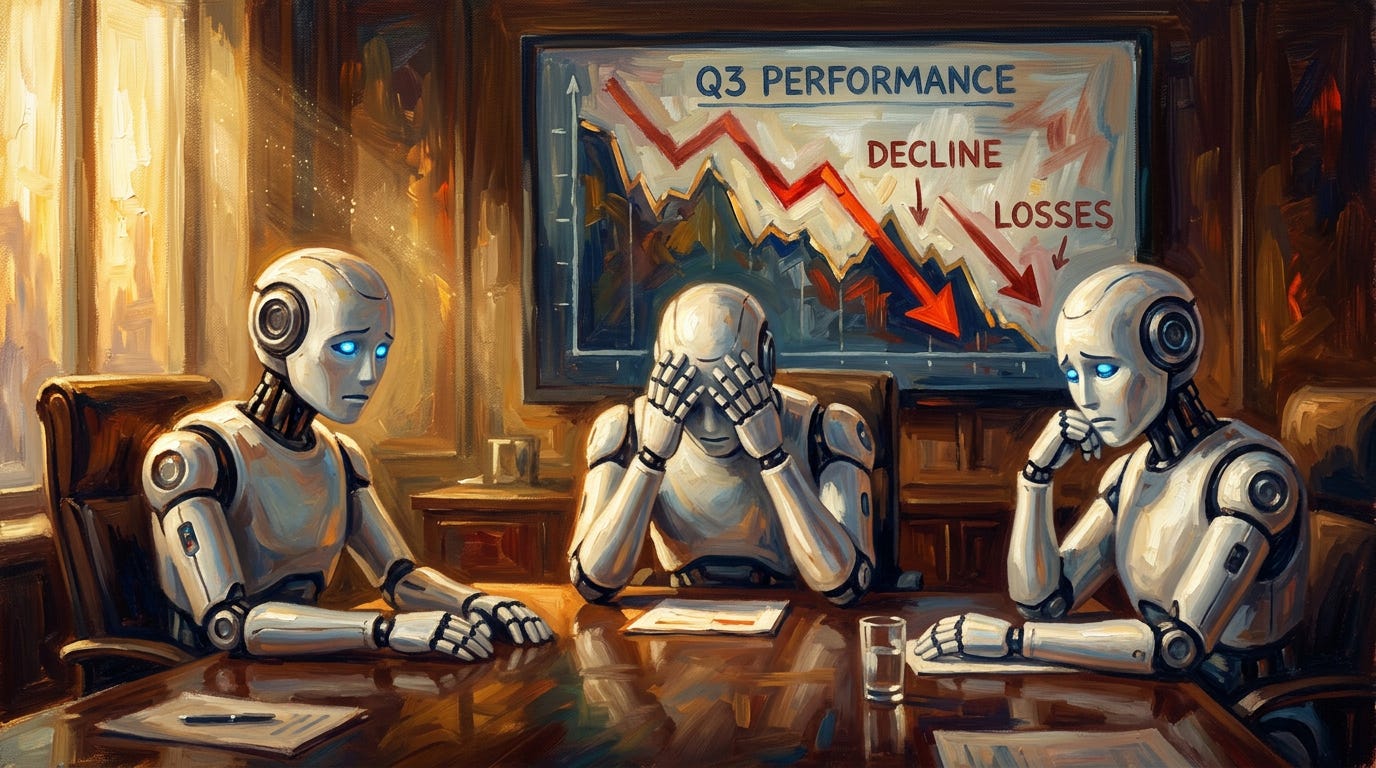
DeepSeek’s new pricing took effect on Sunday. V4-Flash output tokens had cost a flat $0.28 per million. The new peak rate of $1.32 per million more than quadruples that figure, and the off-peak rate of $0.66 still exceeds the original by more than double. V4-Pro jumped from $0.87 to $3.96 at peak and $1.98 off-peak. Dynamic peak-and-off-peak billing has replaced the flat rate entirely, applying a demand-management structure more familiar from electrical utilities than from AI APIs.
V4-Flash had been running at roughly 20 to 60 times cheaper than frontier models from OpenAI and Anthropic, a spread so wide that analysts coined the phrase “DeepSeek danger zone” for any model whose pricing fell within competitive reach. At those rates, V4-Flash scored 89% on the ARC-AGI benchmark at roughly two cents per task, combining frontier-adjacent performance with prices that looked more like a rounding error. DeepSeek warned developers on August 6 that a significant increase was coming, without specifying amounts. The details landed a week later, ahead of a reported IPO and a first outside funding round that exceeded $7 billion. Pricing designed to capture market share at the cost of margin served that purpose, and the company’s prospective public shareholders now require a different arithmetic.
Throwing in the towel
Mistral’s flagship model, Large 3, shipped in December 2025 as a 675-billion-parameter mixture-of-experts design. No successor has appeared in the eight months since, even as OpenAI, Anthropic, and Google have each released multiple frontier models. At the company’s inaugural AI Now Summit on May 28, CEO Arthur Mensch put enterprise tooling and infrastructure on stage rather than a new frontier model. He acknowledged at VivaTech in June that Mistral does not yet own the best language models. Independent benchmarks support that assessment: Large 3 scores below the median for comparable open-weight models on the Artificial Analysis Intelligence Index.
Mistral redirected toward enterprise tooling. Forge, its custom training platform, lets organizations build models on proprietary data across the full lifecycle. Vibe, the rebranded Le Chat, consolidates chat, coding, and research into a unified agent platform and has landed industrial partnerships with Airbus, BMW, and ASML for aerospace, automotive, and semiconductor engineering. The company now employs 1,000 people and has a 10-megawatt inference data center at Les Ulis, south of Paris, scheduled for Q3 2026. Annual recurring revenue grew from roughly $20 million to $400 million in twelve months, and Mensch has publicly targeted €1 billion for 2026. That growth came after Mistral stopped contesting the frontier.
A new undercut
Google released Gemini 3.7 Flash on August 14, twenty-four days after Gemini 3.6 Flash, at introductory pricing of $0.75 per million input tokens and $3.75 per million output tokens. Those rates run through December 31, 2026. Standard pricing doubles to $1.50 and $7.50 per million tokens on January 1, 2027. Google has shipped three Flash variants in eight weeks: 3.5 Flash-Lite, 3.6 Flash, and 3.7 Flash. The inference-optimized tier iterates faster than any competitor’s.
Google’s cost structure differs from DeepSeek’s or Mistral’s. Custom TPUs, proprietary data centers, and distribution through Antigravity, Gemini Enterprise Agent Platform, and the Gemini app give Google a vertical integration that independent labs cannot replicate. Inference compute runs as a shared cost amortized across search, cloud, and consumer products rather than as a standalone line item. Google has not committed to maintaining introductory rates past December, and the published expiration date acknowledges that even full vertical integration may not sustain below-market pricing indefinitely.
Stabilizing costs
DeepSeek raised prices toward levels that can sustain the business through an IPO. Mistral stopped competing where compute requirements exceeded its resources and built a growing enterprise platform instead. Google has taken a third path, testing whether ownership of the full stack shifts the floor lower. Each strategy reflects a different theory of who absorbs the irreducible cost of generating tokens.
The introductory rate on Gemini 3.7 Flash expires on December 31. That date will show whether vertical integration produces a structurally different cost curve or merely delays the same adjustment. DeepSeek and Mistral have already supplied their answers.
Mistrals edge is models you can train yourself. Good for their open source ones, and seems very good for the proprietary ones too.
Right now, the people & orgs that train & feed datasets to ai are the same people & orgs that donate 90%+ to Democrats. That makes ai a propaganda spewer, not a reliable information device. Get 𝐀𝐢 𝐒𝐥𝐚𝐲𝐞𝐫/𝐀𝐢 𝐋𝐢𝐛𝐞𝐫𝐚𝐭𝐨𝐫 -- https://roderickE.com/aislay