

GitHub’s Copilot coding agent, which gained multi-agent orchestration earlier this month, generates complete pull requests from issue descriptions. Replit Agent 4 takes a natural-language prompt and deploys a full-stack application to a live URL in under 30 minutes. Canva AI 2.0, rolling out through 2026, produces editable, brand-aware designs from a conversational brief. Each tool compressed a different creative pipeline to minutes, and the convergence across three unrelated domains in a single year suggests that the change is structural. The vibe coding debate, which has spent 2026 arguing about code quality, may be arguing about the wrong layer.
From prompt to production
The pull request has served as the fundamental unit of collaborative software development for more than a decade, packaging code changes, tests, and documentation into a proposal that one developer submits and others review. GitHub’s Copilot coding agent now generates them autonomously. A developer assigns an issue. The agent reads the repository, writes code on a new branch, runs tests and linters, and opens a draft pull request for human review, all within a 59-minute execution window. Updates earlier this month added multi-agent orchestration, in which specialized agents for implementation, testing, and documentation work simultaneously. Teams using the agent have cut pull request turnaround from 9.6 days to 2.4 days, a 75% reduction, and 69% of agent-using teams report productivity gains.
Replit Agent 4, which launched in March, eliminates the developer’s workflow entirely. A user describes an application in natural language, and the agent scaffolds the project, writes the code, configures a database, and deploys the result to a live URL in 10 to 30 minutes. The entry-level plan costs $25 per month, an order of magnitude below competitors.
Who gets to build
The compression extends beyond code. Canva AI 2.0, unveiled at Canva Create earlier this year, generates fully editable, brand-aware designs from conversational prompts. Canva describes its underlying technology as the first foundation model built to understand the structure and hierarchy of real-world design. The system delivers outputs as individual, editable layers. Brand Intelligence automatically applies an organization’s fonts, colors, and tonal guidelines to every generated asset, producing finished layouts that once required a designer, a brand guide, and multiple review cycles.
The demographic data confirms the shift in who builds. Sixty-three percent of vibe coding users are non-developers — product managers, founders, and designers who had no access to any build pipeline before these tools opened them. A quarter of Y Combinator’s Winter 2025 cohort shipped startups with codebases that were 95% or more AI-generated. The cost of building an MVP has collapsed from roughly $200,000 to $5,000, with timelines compressed from six months to six weeks. Across three domains, the human contribution has narrowed to the description that initiates the work.
The trust collapse
The term “vibe coding” entered the lexicon when Andrej Karpathy described a mode of development in which the developer “fully gives in to the vibes, embraces exponentials, and forgets that the code even exists.” Stack Overflow’s annual survey captured the paradox at its center: 84% of developers now use AI coding tools daily, while only 3% report high trust in what those tools produce. The METR open-source study identified a more disorienting finding: experienced developers using AI assistance were 19% slower at their tasks despite reporting afterward that they believed they had been faster, a gap between perceived and actual productivity spanning 40 percentage points.
Forty-five percent of AI-generated code fails OWASP Top-10 security benchmarks. Code duplication has quadrupled. A CodeRabbit analysis of 470 pull requests found that AI-coauthored code contained 1.7 times more major issues than human-written code. Forty-one percent of developers admit to shipping AI-generated code to production without full review. Enrichlead, a SaaS application built entirely with AI coding tools, collapsed under production load when its founder discovered he could not debug the codebase. Lovable exposed personal data in 170 of 1,645 generated applications.
The human bottleneck
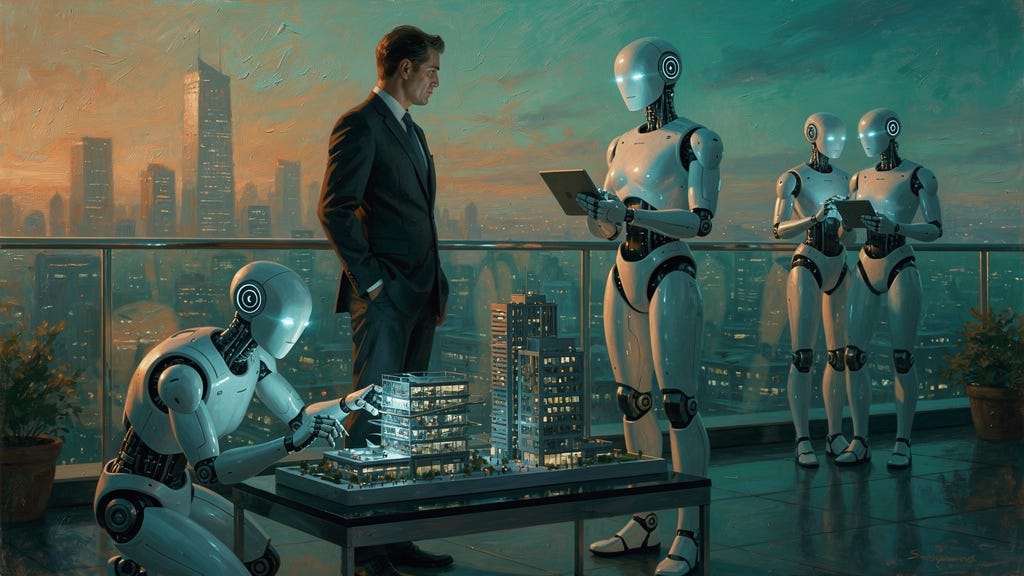
Each tool covered here separated a creative act into execution and judgment, then automated the execution. The pull request, the production deployment, and the brand layout all emerge in minutes now. Forty-six percent of new code already comes from AI systems, and that share will grow. The evaluation, review, and architectural thinking that determine whether something made quickly is also made well remain entirely human, entirely manual, and as slow as they have always been.