

One of the big frustrations with Seedance 2.0 was its lack of character consistency. As with Seedream 5.0 Pro, while it created nicely detailed images with full backgrounds, all of the advances were essentially useless for anything with a human character in them because neither AI image or video processor could provide facially-consistent characters. And facial consistency is arguably one of the more important elements of any visual storytelling medium, since it is how the viewer identifies and relates to the characters involved.
For example, below are two examples of the exact same prompt and the exact same reference images from the PERFECTION video, but whereas the Seedream 4.5 image actually looked like the reference image, the Seedream 5.0 Pro image significantly departed from the details. This may not seem like it matters much, but particularly when it comes to video, when the individual upon whom the camera is focused is visibly transforming over time, it’s extremely distracting.
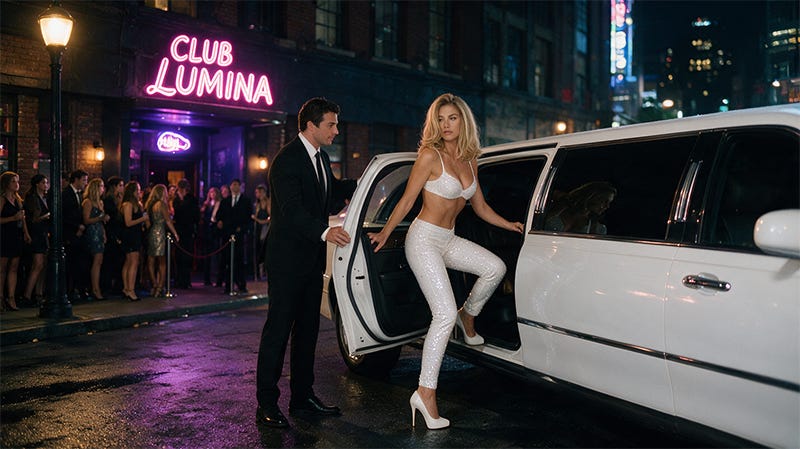
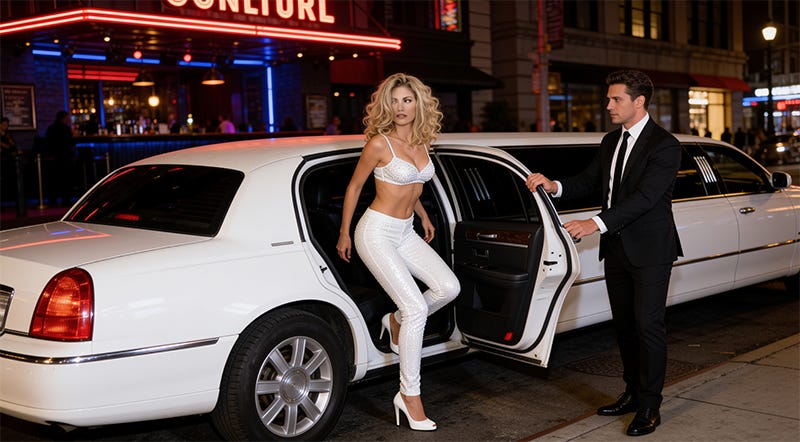
The problem, as I noted in the previous post, appears to be rooted in the AI’s training, as it gravitates toward specific types; in this case, the golf influencer and Sports Illustrated swimsuit model Paige Spyrenac.
So naturally, the first thing I did when given access to Seedance 2.5 was to put it to the facial consistency test. I’ve found one of the most difficult things for the video AIs to handle is when a character turns in a circle; it’s quite common for a person to turn around, and upon completing the turn, to have an entirely different face. So I took an image from a current video project and began testing from there.
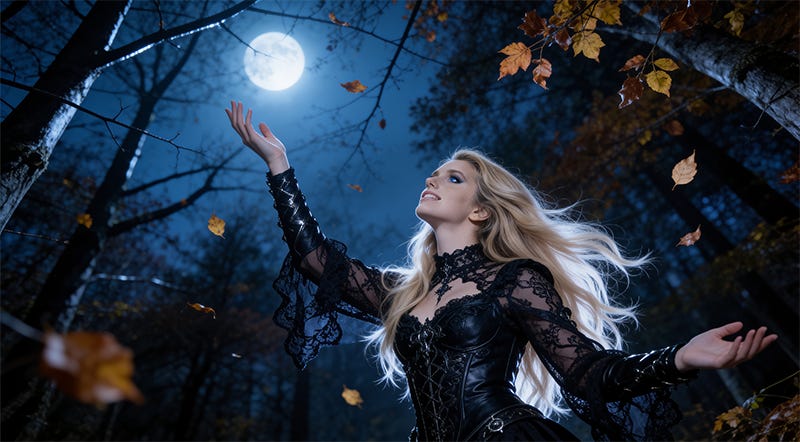
Seedance 2.0: This actually doesn’t look too bad, but that’s mostly because it’s a low-resolution 480p rendering that, along with the angle, tends to obscure the fact that the woman’s facial features are subtly changing.
Kling 3.0 Omni: The same is true of Kling Omni 3.0, which normally tends to provide movements that are too rapid and jerky to be natural. Again, the appearance is superficially passable in a single clip, but the differences will increasingly become obvious over the course of even a short music video, let alone a longer, more complicated storytelling form.
Seedance 2.5: The improvement is subtle, but noticeable. There is a moment in one frame where it appears the woman’s face is beginning to alter, but the algorithm manages to bring it back quickly.
MiniMax H3: This is a new Chinese engine that I first tried out in last week’s video; it’s no longer free, and it is in between Seedance 2.0 and Seedance 2.5 on the cost side, but delivers solid character consistency. In my limited experience, its weakness tends to be on the motion side, although that’s not apparent here.
However, it became quickly apparent that this particular video test for character consistency was sub-optimal due to the angle of the original image as well as utilizing the lower 480p resolution on some of the videos. So, I went ahead and repeated the test, only this time with a higher-resolution close-up that would, in theory, make the differences more noticeable.
And they are, although perhaps not in the manner I’d expected. First, here is the original image, of the same avatar wearing the same outfit.
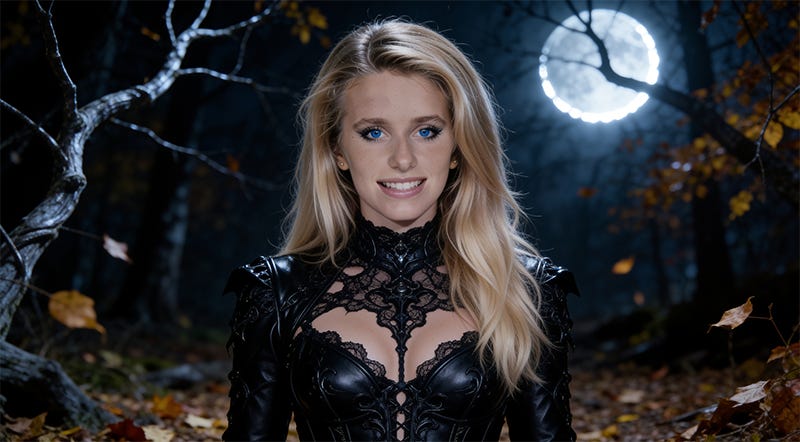
Seedance 2.0: Ironically, facial consistency one of the least of our problems here. The profile consistency is poor, as you can see on the second (?) spin, but it corrects at the end. However, the fact that there are not one, but two spins, and the fact that the woman’s next pulls off an Exorcist-level trick of the body rotating one way and the neck rotating the other nicely demonstrates why Seedance 2.0 was such a disappointment. 53 cents.
Kling 3.0 Omni: We see the same sort of Exorcist-style defying of physics here with Kling, although I do find that Kling is currently capable of doing a basic level of lip-syncing combined with video that unfortunately Creatify’s Aurora can’t manage yet. Kling is also less expensive than the other options, so it can be useful so long as you’re aware of its tendency to get a little more creative with both actions and timing than you’d probably prefer. You can also see how the facial consistency is off right before the beginning of the second reverse spin. 13 cents
Seedance 2.5: This is much better from a consistency perspective and there isn’t any of the previous head-spinning insanity. I do note that the profiles still appear to be off, however, and also the choice to pan the camera back further tends to indicate the engine’s inclination toward its own directorial ambitions. $1.07.
MiniMax H3: This really surprised me by providing better results as well as better consistency. Apparently some of my disappointment with it was more the result of utilizing its 480p mode, which at the time was free, rather than its true capabilities. 75 cents.
So at the moment, my conclusion is that MiniMax H3 is probably your best bet for heavy lifting of your video needs, with judicious use of Seedance 2.5 and Kling 3.0 Omni for spot clips that happen to better suit their idiosyncracies. I simply don’t use Seedance 2.0; if I want to risk problems resulting in unusual clips, I’d rather pay one-quarter of the price and roll the dice with Kling 3.0 Omni.
For a more detailed and professional comparison, JXP has one for review.
I've been frankly astonished with what MiniMax H3 can pull off on local machines. I'm running it on my personal PC (admittedly a beefy rig) and it does some incredible stuff. My power bill may be a smidge higher this month, but taking a family photo and animating it is a delight, and my kids love the results! Lining it up to songs with references and the like...just incredible what one can do locally thanks to China's model. And you can type things like 'Have Trump come in and give a pep talk to my son.' You'd want to use much more explicit instructions, but that's entirely possible. They don't have the filters in place for copyrighted works quite like the others do. So cool.
https://www.youtube.com/@Jsfilmz mentioned in one of his videos that higher resolutions tend to help with face consistency. Something to do with AI having difficulty down sampling high resolution reference images.